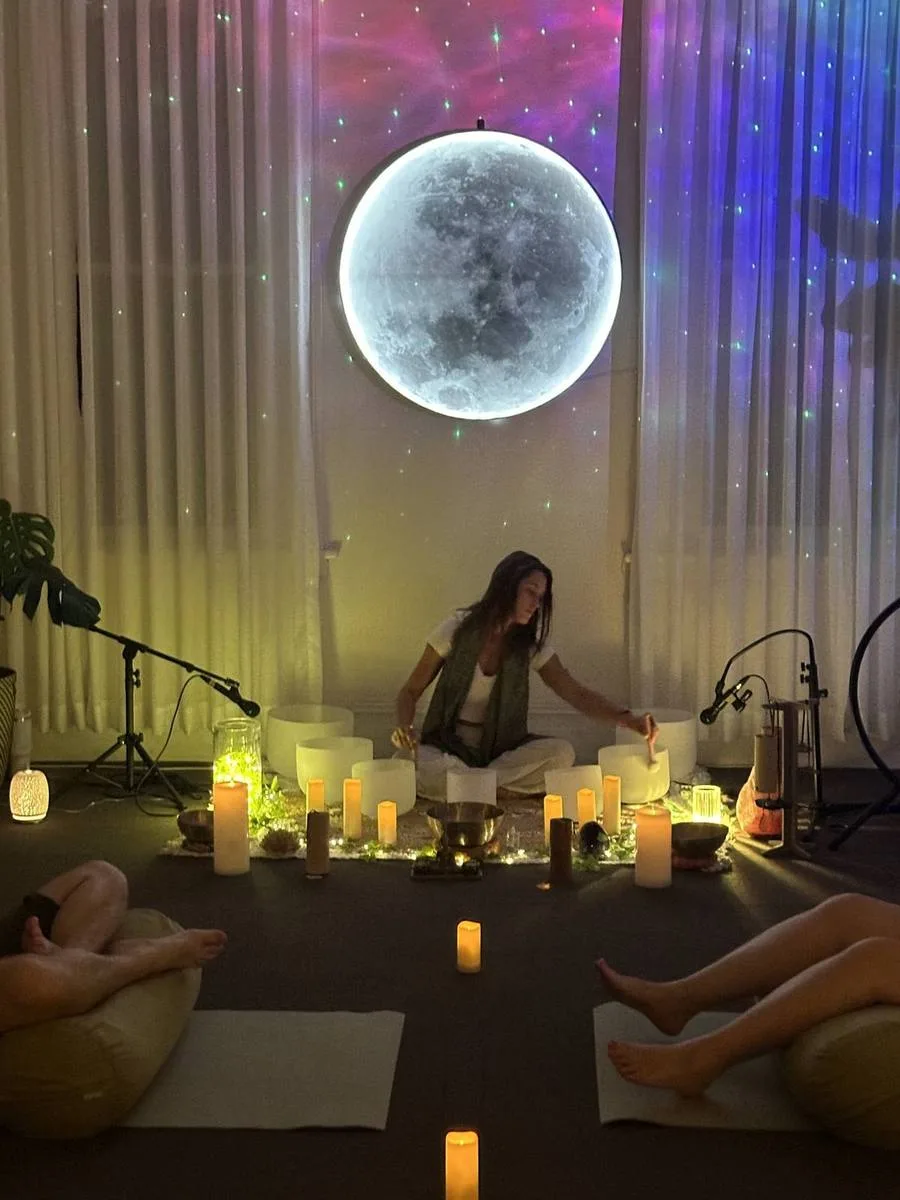
The studio at night. Quiet, warm, and held.
The moment most people try to sleep, something starts. A replay of the day, an inventory of what wasn't finished, a low-grade concern that's been waiting for a quiet moment to surface. The body may be tired. The mind is not.
Sound healing works on this problem differently to anything else. Not by asking the mind to stop — which rarely works — but by giving it something simple and absorbing to follow, until it forgets to keep running.
What actually happens during a sound bath
Tibetan singing bowls, crystal bowls, and gongs each produce sounds that are layered and complex in a specific way — rich with overtones that shift as you listen. The mind, which is used to ignoring most ambient sound, finds these tones genuinely interesting. It follows them.
As the session continues, the mind gradually settles into something closer to a resting state. The breath deepens without effort. Many people pass through a state that feels like waking sleep — aware that sound is happening, but no longer thinking.
This is the state that's hard to reach in bed. Sound healing creates the conditions for it in a way that doesn't require you to do anything at all.
Why people sleep better after a sound bath
There are a few things happening.
The first is simple: an hour lying still, breathing slowly, the body genuinely at rest. Even if you don't sleep during the session, you've given yourself something it often doesn't get enough of.
The second is carryover. The night after a sound bath is often noticeably different — sleep comes faster, feels deeper, leaves you more rested. The quiet from the session carries.
The third is practice. Those who come regularly — weekly group sessions or monthly private sound baths — often find their relationship with sleep shifts over time. It gets easier to reach.
Group sound bath versus private session for sleep
Both can help, and they work differently.
A group sound bath is a shared, usually weekly experience. You're in a room with others. The sound fills the space. Most people find group sessions deeply effective for sleep — there's a collective quality to the settling that many find easier than relaxing alone.
Private sessions are more targeted. If your sleep difficulties are connected to something specific you're carrying — stress, grief, a period of change — a private session allows the practitioner to work with that directly. The session is shaped around you rather than around a group.
Many people start with a group session to understand what sound healing feels like, then add private sessions when they want to go further.
What sound healing is not
Sound healing is not a clinical treatment for sleep disorders. If you have diagnosed insomnia, sleep apnea, or another sleep condition, please continue to work with your doctor. Sound healing can sit alongside that care — it is not a replacement.
What it offers is reliable access to a state of deep rest that many sleep-deprived people rarely experience. That alone, for many people, is enough to shift the pattern.
Finding sound healing for sleep in Inner West Sydney
Mystic Wellness in Petersham runs group sound baths and private sessions throughout the week. If you're coming for sleep specifically, a private session is worth considering for your first visit — there's no shared space, no social dynamic, and the session can be timed for the evening if that suits your schedule.
Petersham is easy to reach from Newtown, Marrickville, Stanmore, Leichhardt, and across the broader Inner West.
Book a Session
Group sound baths and private sessions in Petersham, Inner West Sydney.
See Upcoming SessionsOr ask Phoenix a question on WhatsApp